
Infant Formula Milk Powder Big Bag (FIBC) Specification
Independent advisory on infant formula big bag specification — bulk powder packaging quality, traceability, supply chain integrity and contamination control for infant formula manufacturers and their bulk powder suppliers.
Big bag specification is a critical control point in infant formula supply chains. Inadequate specification creates microbiological, foreign body and contamination risks that propagate through the rest of the manufacturing process.
An example specification for an infant formula and milk powder big bag (FIBC). It illustrates the level of detail required for food-contact intermediate bulk packaging used with infant formula and other milk powders.
Infant Formula Milk Powder Big Bag Specification / Scope
This specification covers the supply of a flexible intermediate bulk container (FIBC) with a capacity of 700 kg to 1000 kg. All deliveries must comply with this specification.
Big Bag Packaging Material Description and Application
A white PE liner, for use with a FIBC, for the bulk packaging of 1000 kg of infant milk powder and other milk powders. The FIBC dimensions the liner must fit are:
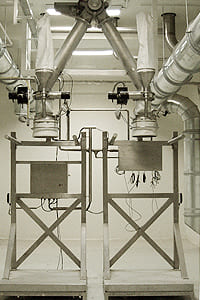 Big bag external dimensions
FIBC width 1000 mm x 1000 mm
FIBC height 1650 mm
Big bag internal dimensions
FIBC width 960 mm x 960 mm
FIBC height 1630 mm
Big bag tolerance
FIBC width ± 50 mm
FIBC height ± 50 mm
The bulk filling process can be viewed by arrangement with Watson Dairy Consulting, to confirm that the FIBC and liner are capable of meeting the process requirements for the performance of the package during packing.
Big bag product description
FIBC 1000 x 1000 x 1650 mm with PE liner.
General Requirements
All packaging materials supplied must be fit for the intended purpose. The technical specifications and quality indicators set out in this specification are mandatory requirements; they exist to ensure the fitness for purpose of the packaging material supplied. Fitness for purpose is a fundamental requirement of this specification and a decisive factor in the acceptance of any material supplied.
All packaging materials must be free of:
- Phthalates.
- BFDGE, NOGE, BADGE, 2-EHA, DIBP, DEHP, ITX, 2-phenylphenol and their derivatives.
- Latex (latex must not be used in, or be present during, the production process).
- PVC, whether as part of the product or of the packaging material.
- The UV-B filter 2-ethylhexyl-4-methoxycinnamate.
The supplier must ensure that all relevant Certificates of Conformity are available. The following further requirements apply:
- The supplier is responsible for proactively informing us before any change is made to material sourcing, composition, processing (including location) or packing. This requirement does not relieve the supplier of its obligation to comply with this specification as defined in its scope.
- The packaging material may only be produced in accordance with the Technical Agreements referred to in section 6 of this specification and authorised by us. It must not contain any further additives.
- The packaging material must be produced and transported under hygienic conditions and in such a way as to avoid contamination.
- Specific standards apply to contaminants and migration; details for the packaging material are given in section 6 / enclosure 04 of this specification (Migration and Food-Contact Approval).
- We must have full access to the supplier’s sampling system, test plan, analytical methods and results relating to the in-process control and release of the supplied packaging material. Our representatives must be granted access to all relevant supply-chain facilities for inspection, by prior arrangement.
- Material traceability is required. The appropriate level of traceability for the packaging material is set out in section 8 of this specification.
- A certificate of actual analysis / measurements is required, at a frequency to be agreed. It will include, by agreement:
- test data on the film;
- migration analysis / certificate per extrusion run of film, on the converted liner;
- test data on the shaped liner.
A copy of the certificate of analysis, setting out the content, test frequencies and other relevant details to be specified, will form part of the contract of purchase between the supplier and the purchaser.
Legal Requirements
The packaging material (including material components, processing aids, detergents and any other materials and aids used to ensure its technical applicability) is used to pack dietetic goods providing nutrition for infants and young children, in accordance with EC Directive 96/5/EC on processed cereal-based foods and baby foods, EC Directive 91/321/EEC on infant formulae and follow-on formulae, and EC Directive 1999/21/EC on dietary foods for special medical purposes.
The production and packing of these goods demand the highest quality standards and strict compliance with the law. The products must present no risk to health.
The packaging material (including all components, processing aids, detergents and other aids used to ensure its technical applicability) must comply with all relevant national, EC and US legislation in force, and in particular:
- The requirements for materials and articles in contact with foodstuffs under Regulation (EC) No 1935/2004 of the European Parliament and Directive 2002/72/EC, and their amendments.
- The EC Directives on packaging and packaging waste, Directive 94/62/EC, and their amendments.
- All relevant US regulations, in particular 21 CFR 174 to 21 CFR 178 and all their sub-sections on indirect food additives.
- All greases and lubricants that may come into direct contact with the packaging material must be EC- and FDA-approved.
- The supplier is responsible for carrying out the enquiries and tests necessary to confirm that the packaging material complies with the relevant legislation for its intended application, and for providing us with statements and/or certificates confirming compliance. A list of the statements provided is given in section 6.
The supplier will provide us with a formal certificate from a recognised professional body confirming the liner’s conformance with EC Directive 2002/72/EC, based on actual analysis with food simulants. The frequency of this analysis and certification will be specified in the contract of purchase.
Organoleptic Requirements
The packaging material must be in such a condition that direct contact with it has no adverse effect on the taste, odour or structure of the product. It must provide adequate protection, be compatible with the product, and not be a source of any contamination. The packaging material must meet our performance standards.
Labelling and Identification
The production date must be clearly marked on pallets and on the transport documentation. The codes used on the package must be sufficient to allow the product to be traced back to its manufacturing batch. Each unit must be labelled with the local material number and order number of the destination production location, together with the date of manufacture, quantity, and type or product name.
For detailed labelling requirements, see enclosure 05.
Transport and Packaging
Packaging, storage and transport of the packaging material to the packing line must be carried out in such a way as to avoid damage, contamination and dust. The materials used for this packaging must be suitable for the purpose and must comply with the EC Directives on packaging and packaging waste (Directive 94/62/EC and its amendments). Direct food-contact materials must be packed in materials that comply with EC Directive 2002/72/EC, as amended, on materials and articles intended to come into direct contact with foodstuffs.
Storage and Shelf Life
The packaging material must be stored under suitable ambient conditions. The storage period must not exceed the period for which the suitability of the packaging material can be guaranteed. If any special storage requirements apply, the supplier must inform us promptly, accurately and in full. The material must be stored away from sources of strong odour.
Certificate of Analysis
We are entitled to require a certificate of analysis confirming, on the basis of the analytical data, that the packaging material conforms to this specification. The certificate of analysis must be sent to the destination production location with every delivery, quoting the production batch code as defined in section 8 of this specification. For the parameters, see the Technical Agreement and Certificate of Analysis sections of this specification.
How Watson Dairy Consulting Can Help
A specification like the one above only protects you if it is correctly written, properly agreed with suppliers, and actually verified in practice. We help infant formula and milk powder manufacturers across the whole packaging chain:
- Writing and reviewing packaging specifications – big bags (FIBC), liners, sacks, cans and finished-pack formats, against EC and US food-contact law.
- Supplier qualification and auditing – assessing FIBC and liner suppliers, their certificates of conformity, traceability and food-contact compliance.
- Migration and food-contact compliance – making sure liners and packaging meet Regulation (EC) 1935/2004, 2002/72/EC and relevant US 21 CFR requirements.
- Big bag filling and emptying systems – specifying and improving the filling stations, emptying stations and powder handling that the packaging has to perform with.
- Quality and risk review – embedding packaging controls into your wider infant formula quality and food-safety systems.
Frequently Asked Questions
What size is an infant formula milk powder big bag (FIBC)?
What substances must be excluded from food-contact FIBC liners for infant formula?
Which regulations apply to infant formula packaging?
Can you write or review our infant formula packaging specification?
Need help specifying or auditing food-contact packaging for infant formula or milk powder? For independent support on big bag (FIBC) and milk powder packaging specifications, please contact us.
Related pages: Infant formula and baby milk powder production · Infant formula quality and brand security · Milk powder packing lines
Further reading: John Watson publishes articles on dairy industry topics on LinkedIn — from infant formula safety and milk supply to plant design, yield improvement and dairy commodity outlook. Browse all articles by John Watson on LinkedIn →
John Watson
Office: +44 1224 861 507
Mobile: +44 7931 776 499
jw@dairyconsultant.co.uk
We are a longstanding member of the Society of Dairy Technology
and have Fellowship of the Institute of Food Science and Technology.



Contact Details
John Watson
Office: +44 1224 861 507
Mobile: +44 7931 776 499
jw@dairyconsultant.co.uk
What Our Clients Say
We are a longstanding member of the Society of Dairy Technology
and have Fellowship of the Institute of Food Science and Technology.
Locations

Services
Enquiry Form

