
Dairy & Juice Filling Lines
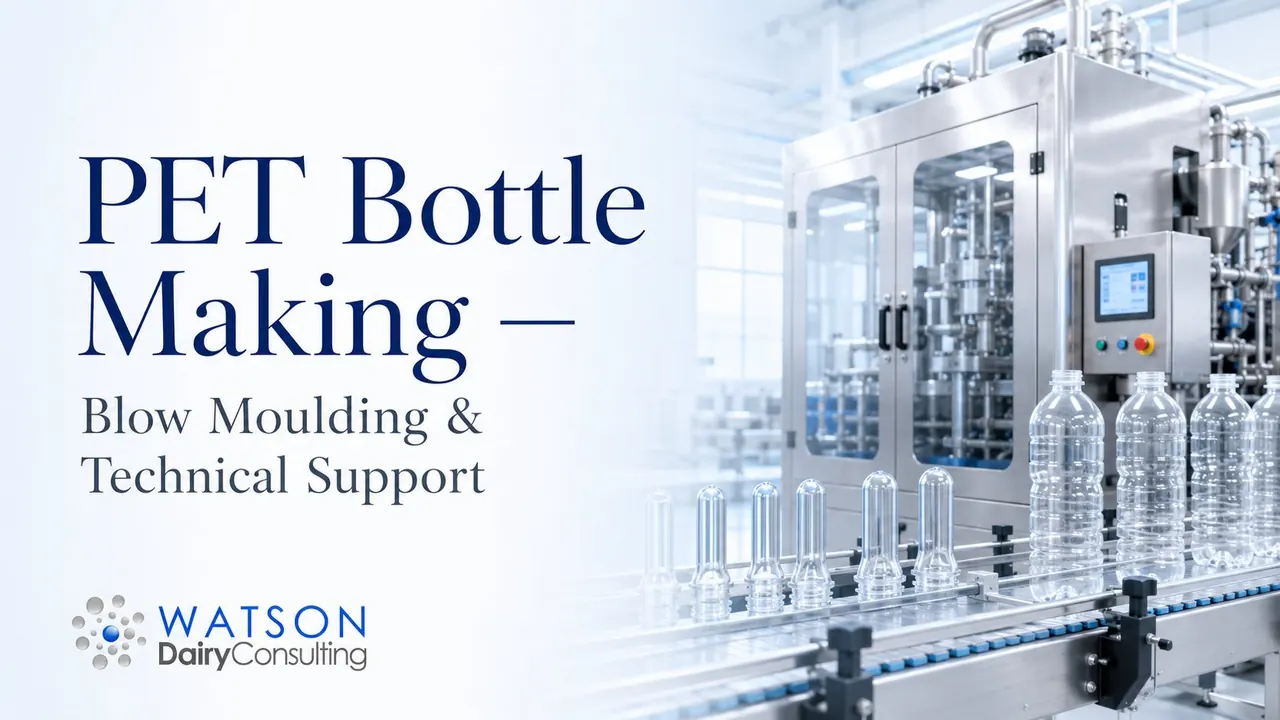
Two specialisms, one independent partner: dairy and juice filling lines, and bottle blow moulding feasibility studies. We design milk, plant milk, cultured drink and juice filling lines, and we carry out independent make-versus-buy feasibility studies on in-house PET bottle blow moulding.
What sets us apart is genuine dairy manufacturing expertise and true supplier independence: we understand the product, the hygiene, the process and the commercial reality, not just the machinery – and we tell you whether making your own bottles actually pays, rather than selling you a line. With over 20 years of hands-on involvement in filling and bottle-production projects, we help clients get the right answer, and the right line, first time.
Dairy and Juice Filling Line Expertise
We are independent specialists in dairy, plant-based and juice filling lines – milk, plant milks, cream, drinking yogurt and cultured drinks (lassi, doogh, ayran, kefir, buttermilk), UHT and ESL products, fresh juice, NFC juice, smoothies and wider beverages. Our focus is practical: choosing the right line configuration for your product, specifying credible equipment, protecting hygiene and product quality, and delivering a line that meets throughput and cost targets.
Dairy and beverage know-how, not just equipment: filling milk, juice and dairy drinks is not the same as filling water. Viscosity, foaming, hygiene, hot-fill or cold-fill, shelf life, clean-in-place and product sensitivity all shape the right line. We bring real dairy and beverage manufacturing experience to those decisions.
Independent and Supplier-Neutral
We are not tied to a single equipment supplier. Our recommendations are driven by your product, volume, budget and operational needs, not by a manufacturer's sales targets. That independence is the whole point of bringing us in.
What We Provide
Feasibility Studies
Independent feasibility and make-versus-buy analysis for dairy and juice filling lines, including throughput, line configuration, payback and risk.
Line Design
Filling, capping and labelling line layout, process flow, hygiene zoning, capacity planning, and building and utility requirements for milk, juice and beverage lines.
Equipment Specification
Independent specification and tender support for blow moulding, filling, capping, labelling, packing and end-of-line equipment.
Installation & Commissioning
Project support through installation, commissioning, performance testing and handover, helping protect quality and timelines at the highest-risk stage.
Dairy and Juice Filling Line Types
We design and support filling lines across the full range of dairy, juice and beverage products, in PET, HDPE, glass and carton formats:
- Milk filling and bottling lines (fresh, ESL and UHT milk)
- Cream, flavoured milk and dairy drink filling lines
- Yogurt drink and cultured dairy beverage filling
- Fresh juice, NFC (not-from-concentrate) and from-concentrate juice filling lines
- Smoothie and blended beverage filling
- Water and soft drink bottling lines
- PET, HDPE and glass bottle filling lines
- Hot-fill and cold-fill beverage lines
- Filling, capping, labelling and end-of-line packing
- Turnkey dairy and juice line installations
Milk and Dairy Filling Lines
Filling milk and dairy products brings challenges that general filling vendors often underestimate: hygiene and cleanability, foaming control, accurate fill, dosing of sensitive products, hot-fill versus cold-fill, clean-in-place (CIP), and protecting shelf life. Our dairy manufacturing background means we design and specify dairy filling lines around how the product actually behaves and how the factory actually has to run, not just around machine throughput on paper.
We support milk bottling lines, ESL and UHT filling, cream and flavoured milk, in PET, HDPE, glass and carton formats.
Drinking Yogurt and Cultured Drink Filling Lines
Cultured and fermented drinks are a fast-growing category and one of the most demanding to fill well – which is exactly where our dairy expertise pays off. Drinking yogurt, lassi, doogh, ayran, kefir and buttermilk each carry live cultures, variable viscosity, a tendency to foam and separate, and strict hygiene requirements. Get the filling temperature, dosing, de-aeration or hygiene design wrong and you get short shelf life, separation, foaming losses or contamination.
We design and specify filling lines for the full range of cultured and yogurt-based drinks, protecting product integrity, cultures and shelf life while hitting throughput and cost targets. Most general filling suppliers treat these as just another liquid; we treat them as the cultured dairy products they are.
Plant Milk and Plant-Based Drink Filling Lines
Plant milks – oat, almond, soy, coconut, rice and blends – are booming, but they do not fill like dairy milk. Differences in viscosity, protein and stabiliser content, foaming, sedimentation and shelf-life strategy (often UHT and aseptic) all shape the right line. We help plant-based drink producers specify filling lines that suit their specific formulation, format and shelf-life target, drawing on the same process discipline we apply to dairy.
Juice and Beverage Filling Lines
Juice filling has its own demands: protecting freshness and vitamin content, handling pulp and particulates, hot-fill or aseptic options, pasteurisation interfaces, and presentation that sells on shelf or in-store. We have delivered fresh juice filling lines, including a recent turnkey PET juice bottling line in the UK, and can support NFC juice, from-concentrate juice, smoothies and wider beverages from feasibility through to commissioning.
Products We Fill
We design and support filling lines for the full range of liquids, with particular specialism in dairy, plant-based and cultured drinks:
- Milk – fresh, ESL and UHT milk, cream and flavoured milk
- Plant milks – oat, almond, soy, coconut, rice and blended plant-based drinks
- Drinking yogurt – set and stirred yogurt drinks and probiotic beverages
- Lassi – sweet, salted and fruit lassi (also spelled lassie)
- Doogh and ayran – savoury cultured yogurt drinks
- Kefir – dairy and water kefir
- Buttermilk – cultured and traditional buttermilk
- Juice – fresh, NFC, from-concentrate, smoothies and blends
- Water and soft drinks – still and sparkling
- All other liquids – if it can be filled into a bottle, pouch or carton, we can help
Cultured-drink specialists: drinking yogurt, lassi, doogh, ayran, kefir and buttermilk are not "just another liquid". Live cultures, viscosity, foaming, separation and hygiene all shape the line. Our dairy and cultured-product background is exactly what these projects need.
Recent Project: Turnkey PET Juice Bottling Line, UK, 2024
In 2024 we delivered a turnkey PET juice-bottle production and filling line for a UK self-serve juice brand. The fully automated line produces bottles in three sizes at 5,000 bottles per hour, with integrated labelling and caps partially applied for use with in-store juice machines in malls and supermarkets – supported from concept through to a fully operational, commissioned line. We are actively seeking similar dairy, juice and beverage filling line projects in the UK and internationally.
Bottle Blow Moulding Feasibility Studies
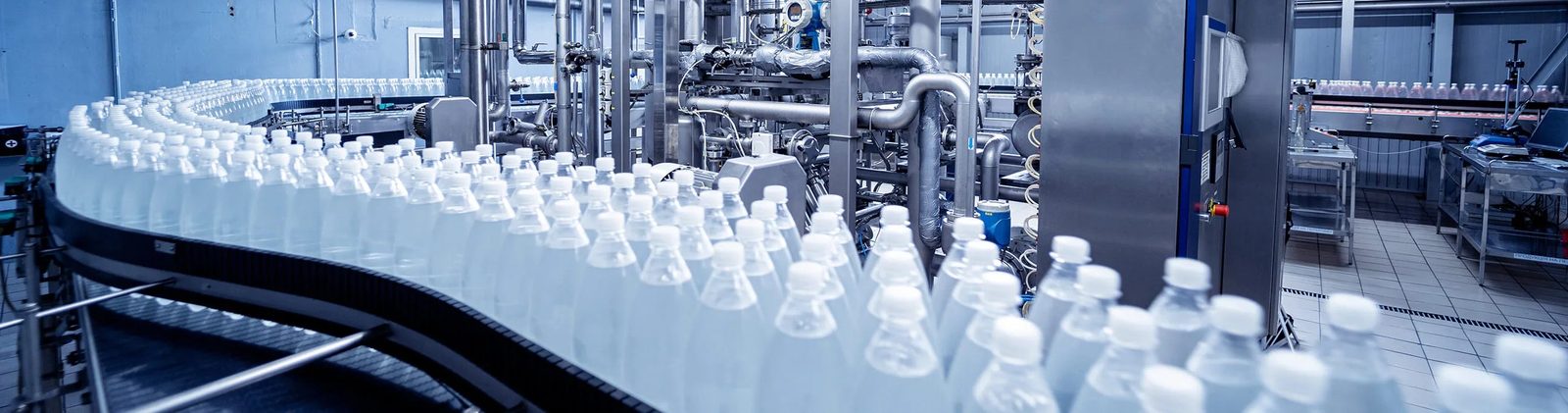
Alongside filling line design, bottle blow moulding feasibility is a core part of what we do. The single biggest cost decision on many dairy, juice and beverage projects is whether to make your own bottles in-house or buy them in – and it is a decision equipment vendors rarely advise on objectively, because they have a line to sell. We do not. Our independent feasibility studies give you the real numbers so you can decide with confidence.
Bought-in bottles look cheap per unit, but the true cost includes something most buyers overlook – you are paying to ship air. A lorry of empty PET bottles is mostly fresh air and empty space. Producing bottles on site from compact preforms changes the economics entirely.
Why in-house blow moulding so often wins on cost:
- You stop shipping air and empty bottles. Blow-moulding on site from compact preforms removes inbound bottle deliveries, the haulage cost, the carbon, and the warehouse space that empty bottles swallow up.
- Compact preforms replace bulky bottles. Preforms are a fraction of the volume of a finished bottle, so storage and handling costs fall dramatically compared with holding bought-in bottles.
- A modern blow moulder can be close to a one-man operation. Automated blow moulding lines need very little labour to run, so in-house production does not mean a big new headcount.
- Supply security and price control. You stop depending on external bottle suppliers, their lead times, their minimum orders and their price rises.
- You can become a bottle supplier yourself. Spare blow-moulding capacity can be sold – supplying bottles to other local producers, or even competitors, turning a cost centre into a revenue stream.
What a Blow Moulding Feasibility Study Covers
None of the savings above are automatic – which is exactly why an independent feasibility study matters. The case for in-house blow moulding depends on your volumes, bottle design, preform sourcing, energy cost and how much spare capacity you can sell. Our blow moulding feasibility studies put hard numbers against all of it:
- Make-versus-buy analysis – the fully-loaded cost of in-house PET bottle production (preforms, energy, labour, maintenance, depreciation) against the real, landed cost of bought-in bottles including freight, storage and handling.
- Bottle and preform design review – weight, format and preform sourcing, and how bottle design affects both line speed and unit cost.
- Capital and running cost modelling – equipment, installation, energy and labour, with payback and return-on-investment figures.
- Capacity and spare-capacity analysis – matching the blow moulder to your filling line, and valuing the option to sell surplus bottles to others.
- Integration with the filling line – whether to run blow-fill in line or blow-and-store, and the practical layout, utilities and operability implications.
- Risk and sensitivity – how the business case holds up if volumes, energy prices or preform costs move.
The output is a clear, evidence-based recommendation: whether in-house blow moulding pays for your specific project, and if so, how to do it. Where it stacks up, we take the project through to blow moulding line design, equipment specification and quotation preparation. Where it does not, we tell you that too – that independence is the whole point of bringing us in.
When Does In-House Blow Moulding Make Sense?
In-house blow moulding is not right for every producer, and a good feasibility study is as much about ruling it out as ruling it in. It tends to make most sense where bottle volumes are high and steady, where freight and storage of bought-in bottles is a significant cost, where supply security or price volatility is a concern, or where there is an opportunity to sell spare bottle capacity locally. For water and low-margin beverages in particular, where every fraction of a penny per bottle matters, the case is often compelling. Our study tells you which side of the line your project falls on.
Independent Feasibility Studies for the Whole Project
A feasibility study is the cheapest insurance on any filling or bottling project. Before capital is committed, we test whether the line, the volumes, the bottle strategy and the business case actually hold together – covering both the filling line and the blow moulding decision together, so packaging, process and cost are optimised as one project rather than three separate purchases.
- Bottle make-versus-buy and blow moulding feasibility
- True landed cost of bottles including freight, storage and handling
- Line throughput, configuration and automation level against your volumes
- Capital cost, running cost, payback and return on investment
- Spare blow-moulding capacity and the option to supply bottles to others
- Hygiene, product quality, shelf life and operational practicality
Why Use Us for Filling Lines & Blow Moulding Feasibility
We have been actively involved in filling and bottling line development for over 20 years, backed by genuine dairy manufacturing experience. We provide the process know-how that helps get your line right first time – reducing costly redesign, delays and underperformance – and we stay independent of equipment suppliers so the recommendation always serves your project, not a sales target.
We can support the full journey: feasibility study, line design, equipment specification, tendering, installation supervision, commissioning and handover, working alongside your team, your chosen suppliers, or as independent technical reviewers.
PET vs HDPE: Which Bottle Material Is Right for Your Product?
One of the first decisions in any bottling project is the bottle material. For dairy, juice and beverages, the two main plastics are PET (polyethylene terephthalate) and HDPE (high-density polyethylene). They look similar to a shopper but behave very differently in production, on shelf and in recycling, and choosing the wrong one is an expensive mistake to unwind. Here is how they compare:
| Factor | PET | HDPE |
|---|---|---|
| Appearance | Crystal clear, glossy – shows the product | Naturally opaque / milky white |
| Typical use | Juice, water, soft drinks, flavoured and cultured drinks where clarity sells | Fresh milk, large white-milk bottles, some yogurt drinks |
| Light protection | Clear PET lets light in (can need UV blockers for light-sensitive products) | Opaque, so naturally protects light-sensitive products such as milk |
| Barrier / carbonation | Good gas barrier – suited to carbonated drinks | Poorer gas barrier – not used for carbonated products |
| Production | Stretch blow moulding from preforms; very high line speeds | Extrusion blow moulding; well suited to large and handled bottles |
| Recycling | Widely recycled (rPET), and food-grade rPET is available | Widely recycled (rHDPE), food-grade supply more limited |
In short: PET is usually chosen where clarity and shelf appeal matter – juice, water, flavoured and cultured drinks – and where a product is carbonated. HDPE is the traditional choice for fresh white milk, where its opacity protects the product from light and its toughness suits large, handled bottles. Many decisions are not clear-cut, and the right answer depends on your product, shelf life, branding, fill method and recycling strategy together. As an independent adviser, we help you weigh all of these rather than defaulting to whatever a single supplier happens to make.
Recyclability and Recycled Content (rPET and rHDPE)
Recyclability is now a core packaging decision, not an afterthought. Both PET and HDPE are among the most widely recycled plastics, and both can be produced with recycled content – rPET (recycled PET) and rHDPE (recycled HDPE). Designing a bottle to be genuinely recyclable, and to carry recycled content, affects material choice, colour, label and cap selection from the very start of the project.
In the UK there is also a direct financial driver. The Plastic Packaging Tax applies to plastic packaging that contains less than 30% recycled content, and from 1 April 2026 the rate is £228.82 per tonne. Businesses manufacturing or importing more than 10 tonnes of plastic packaging in a 12-month period must register with HMRC, even if no tax is ultimately due. Designing in 30% or more recycled content can remove the tax on that component – so recyclability and recycled content feed directly into the cost case for a bottling line.
There is a practical catch worth knowing early: food-grade recycled plastic that meets food-safety standards is in scarce supply and commands a premium, so achieving recycled-content targets for food-contact bottles such as milk and juice is harder than for general packaging. The rules are also tightening – from April 2027, pre-consumer factory offcuts will no longer count towards the 30% threshold, shifting the emphasis onto genuine post-consumer recyclate. We factor all of this into feasibility and design so your bottle strategy stands up commercially and for compliance, not just on day one but as the regulations evolve.
Microplastics and the Future of Beverage Packaging
Microplastics have moved from a niche concern to a mainstream one, and producers increasingly ask what it means for their packaging. It is a fast-moving area where the science is still developing, so the honest position is a measured one: research into microplastics in food and drink is ongoing, regulators are paying close attention, and the long-term picture – both scientific and regulatory – is not yet settled. What is clear is the direction of travel, and sensible producers are planning for it now rather than being caught out later.
For beverage packaging, the practical response is not panic but good design and forward planning. The trends we help clients prepare for include:
- Lightweighting – using less plastic per bottle through better preform and bottle design, cutting both material cost and environmental footprint.
- Higher recycled content – rPET and rHDPE, driven by both regulation and consumer expectation.
- Design for recycling – mono-material bottles, compatible caps and labels, and avoiding additives that contaminate the recycling stream.
- Alternative and emerging materials – bio-based and next-generation barrier materials, assessed honestly on whether they actually perform and recycle, rather than on marketing claims.
- Refill and reuse formats – relevant for some products and channels, though not all.
Our role is to keep you grounded in evidence: to separate genuine, proven packaging improvements from greenwash, and to design a bottle and line strategy that is robust to tighter future regulation. Building flexibility in now – in material choice, recycled-content capability and bottle design – is far cheaper than re-engineering a line later. That forward view is exactly the kind of independent, long-term thinking a one-off equipment sale does not provide.
Frequently Asked Questions
Can you design a filling line for drinking yogurt, lassi, doogh or kefir?
Do you work with plant milk and plant-based drinks?
Is it cheaper to make my own bottles or buy them in?
What does a bottle blow moulding feasibility study involve?
Should I use PET or HDPE bottles for my product?
Do I need recycled content in my bottles, and what about the Plastic Packaging Tax?
What is the best filling line for fresh juice?
How much does a milk or juice bottling line cost?
Can you design a complete turnkey dairy or juice line?
Do you only work with one equipment manufacturer?
What makes dairy and juice filling different from water filling?
Planning a dairy, juice or beverage filling line project? Whether you need a feasibility study, line design, equipment specification or full turnkey installation support, we can help. Please contact us to discuss your requirements.
Further reading: John Watson publishes articles on dairy industry topics on LinkedIn — from infant formula safety and milk supply to plant design, yield improvement and dairy commodity outlook. Browse all articles by John Watson on LinkedIn →
Contact Us
For more information or to discuss your dairy filling line, juice filling line or feasibility study requirements, please contact us.
John Watson
Office: +44 1224 861 507
Mobile: +44 7931 776 499
jw@dairyconsultant.co.uk
We are a longstanding member of the Society of Dairy Technology
and have Fellowship of the Institute of Food Science and Technology.



Contact Details
John Watson
Office: +44 1224 861 507
Mobile: +44 7931 776 499
jw@dairyconsultant.co.uk
What Our Clients Say
We are a longstanding member of the Society of Dairy Technology
and have Fellowship of the Institute of Food Science and Technology.
Locations

Services
Enquiry Form

