
Soft Cheese and Enzyme Modified Cheese
Soft cheese
Watson Dairy Consulting is a soft cheese and enzyme modified cheese (EMC) consultant. We help manufacturers develop new soft and fresh cheese products, improve and automate existing processes, and design complete new factories – from the cultures and process flow through to quality control and troubleshooting.
How we help with soft cheese
- New product and process development for soft and fresh cheeses.
- Production line and full factory design.
- Automation of existing manual or semi-automatic processes.
- Cultures, procedures and quality control.
- Diagnosing and resolving cheese faults and quality problems.
- Expert witness and technical due diligence.
Enzyme modified cheese (EMC)
Enzyme modified cheese concentrates natural cheese flavour, letting food manufacturers achieve a strong, mature cheese taste at low inclusion rates – widely used in the bakery, snack and processed-food industries. We provide process and product development for EMC and natural cheese flavours, including young cheese engineered to deliver a mature flavour profile.
Cottage Cheese Production
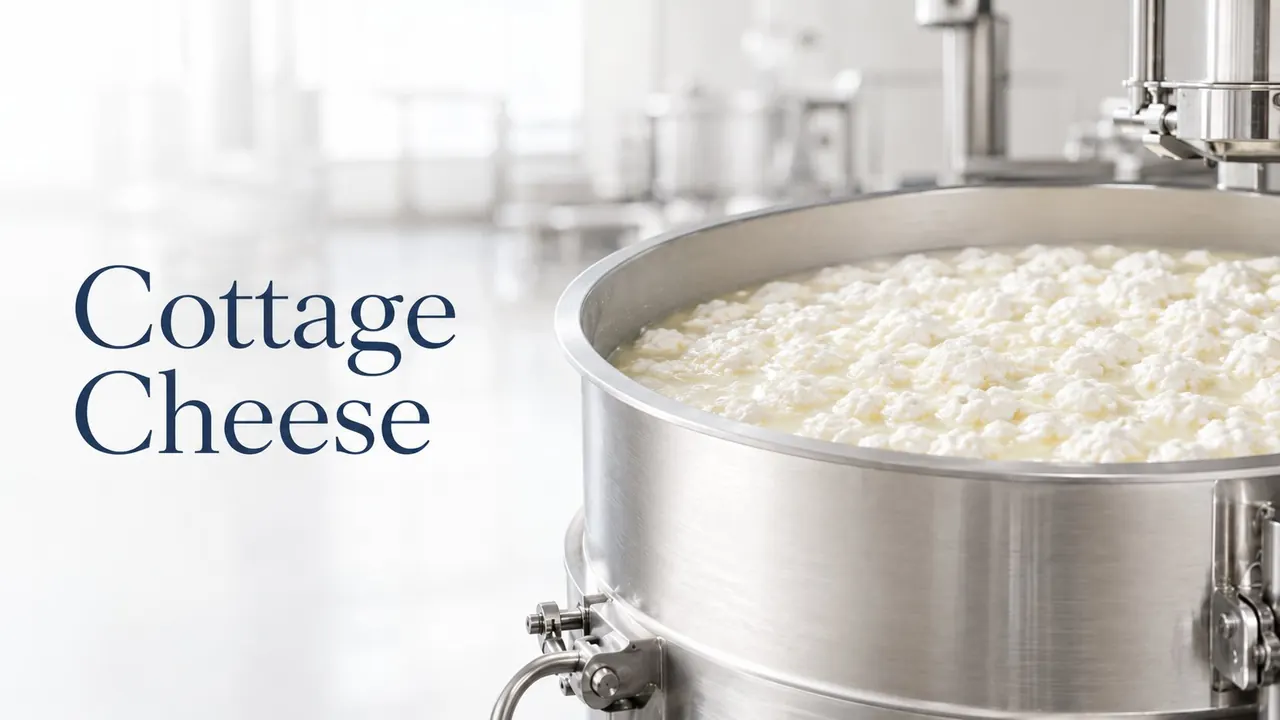
Cottage cheese is an acid-coagulated fresh cheese with a distinct curd-and-cream structure that, unlike most cheeses, is built in two stages: a low-fat curd is set, cooked and washed first, then dressed with a separately prepared cream dressing before packing. Get the curd structure right and the rest is straightforward; get it wrong and no amount of dressing rescues the product. Watson Dairy Consulting provides product development, factory design, automation and troubleshooting support for cottage cheese plants from artisan-scale through to high-volume continuous production.
The cottage cheese process step by step
1. Milk standardisation. Cottage cheese is made from skimmed milk standardised to a low fat content (typically below 0.5%) and a controlled solids-not-fat (SNF) level. Higher SNF gives firmer curd and better yield but can make the curd tough if pushed too far. Most modern plants standardise by ultrafiltration or by addition of skimmed milk powder to lift SNF to around 9.5–10%.
2. Heat treatment. Pasteurisation is typically 72–74°C for 16–30 seconds – deliberately mild. Heat treatment that is too aggressive denatures whey proteins, traps them in the curd and produces a soft, mushy texture that releases water (syneresis) during shelf life. The pasteuriser run conditions are one of the most common root causes of texture complaints.
3. Inoculation and coagulation. A mesophilic starter culture (typically Lactococcus lactis subsp. lactis and cremoris) is added to the cooled milk in the cheese vat. The process splits into two routes:
- Long-set (overnight, low temperature): small culture inoculum (around 1%), set at 22–26°C, coagulation takes 12–16 hours. Produces the cleanest flavour and most uniform curd structure – the preferred method for premium product. Best for plants with overnight cycles and good vat utilisation.
- Short-set (rapid, higher temperature): larger inoculum (around 5%), set at 30–32°C, coagulation in 4–6 hours. Suited to single-shift operations and faster vat turnover. Curd is more acidic at cut and slightly more prone to shattering during cooking.
A small amount of rennet (around 0.5 ml per 100 L) may be added in some recipes to firm the curd at cut, though traditional US-style cottage cheese is rennet-free.
4. Curd cut and healing. The curd is cut at pH around 4.6–4.7 (target depends on the recipe and the country) using mechanical knives sized for the desired curd grain – typically 6 mm (small curd) or 12–19 mm (large curd / "country style"). Curd is then allowed to heal for 10–15 minutes before cooking. Cutting too soon, while the curd is still fragile, is one of the most common causes of fines loss and reduced yield.
5. Cooking the curd. Cooking is what makes or breaks cottage cheese. Gentle, controlled agitation while the temperature is raised over 90–120 minutes – typically from set temperature to a final cook temperature of 50–57°C – expels whey, firms the curd and develops the characteristic resilience. Heating must be slow at the start (no more than 1°C every 5 minutes) and can speed up later. Going too fast generates a hard rind on the curd particles that traps moisture inside and gives a tough exterior with a wet interior.
6. Whey drainage, washing and chilling. Whey is drained at the vat. The curd is then washed in three or four stages with progressively colder water (typically 25°C, 15°C and 4°C) to remove residual lactose, stop the acidification, and chill the curd ready for creaming. Wash water quality matters: any chlorine carryover affects the finished flavour. Water hardness also affects calcium balance in the finished product.
7. Cream dressing. A cream dressing (typically 10–14% fat) is prepared separately, pasteurised, homogenised, cooled and held. Dressing salt, stabilisers (often locust bean gum, guar or carrageenan), and sometimes cultured cream or buttermilk are added for flavour and stand-up. The chilled curd and dressing are blended in a precise ratio – usually around 4 –4.5 parts curd to 1 part dressing – just before filling.
8. Filling, sealing and cold storage. Filling is into pots or tubs at 4–7°C, typically using volumetric or piston-style fillers designed to handle the curd-in-dressing matrix without breaking the curd. Shelf life of fresh cottage cheese in modern packaging is typically 14–21 days at 4°C, longer with modified atmosphere packaging and tight microbiological control upstream.
Modern continuous cottage cheese systems
Traditional batch vat production remains common, but high-volume producers increasingly use continuous coagulation systems – including the Tetra Tebel CCS (Continuous Cottage cheese System) and similar designs – that allow milk to enter and curd to leave the same plant continuously. These systems use plug-flow tubular coagulators, automated curd cutting and integrated cook/wash/chill belts, dramatically reducing labour and improving consistency at scale. The capital investment is significant; the payback depends on volume and current yield losses.
Yield, losses and economics
A well-run cottage cheese plant achieves a curd yield of around 17–19 kg of dressed cottage cheese per 100 kg of standardised skimmed milk – depending on milk solids, recipe and the curd:dressing ratio. Losses appear in three places: fines in the whey (curd shattered at cut or cook), solids in the wash water (excess wash, poor curd structure), and protein in the whey (heat treatment too aggressive, denaturing protein that is then lost). A yield audit on each of these usually finds 1–3 percentage points of recoverable margin.
Common cottage cheese faults
- Bitter flavour – usually proteolysis from psychrotrophic bacteria upstream (raw milk quality), or wild yeast contamination in the curd vat or dressing.
- Sour or tangy flavour – over-acidification at cut or insufficient washing. Target wash-out is residual lactose below 0.5%.
- Yeasty or fermented flavour during shelf life – Candida or Pichia contamination at filling. Usually a hygiene or chilling-chain issue, not a recipe issue.
- Wet, watery, or weeping product – heat treatment too aggressive (whey protein in curd), cook too fast (hard rind, moisture trapped), or dressing stabiliser insufficient.
- Mushy or fragile curd – cut too soon, agitator too aggressive during cook, curd too acidic at cut.
- Mealy or gritty texture – excessive heat treatment of the dressing, calcium phosphate precipitation in the cream, or homogenisation issues.
- Curd:dressing ratio drift – metering issue at the blender; affects pack weight and gives both customer complaints (dry product) and yield loss (over-dressed).
Cottage cheese flavours, additions and value-added variants
Plain cottage cheese is a commodity; flavoured and value-added cottage cheese is where the margin lives. Additions are introduced either into the cream dressing (for soluble, fine or powdered ingredients) or as a separate inclusion step after curd-dressing blending (for particulates that need to remain visible and intact). The right approach depends on the inclusion, the target shelf life and the filler design.
Fruit and sweet variants
Fruit cottage cheese is the largest value-added segment in many markets – particularly the UK, Germany, the Nordics and parts of Eastern Europe. Common formats:
- Fruit-on-the-bottom (twin-pot or two-compartment) – a fruit preparation in a separate compartment that the consumer mixes in. Cleanest from a microbiology and shelf-life perspective because the curd never sees the fruit.
- Pre-blended fruit – fruit preparation stirred through the curd-and-dressing matrix. Faster eat, but requires careful pH control (most fruit preps sit at pH 3.5–4.0 and can over-acidify the surrounding curd if not balanced).
- Common fruit preparations: pineapple (still the volume leader in many markets), peach, mandarin, strawberry, cherry, raspberry, blueberry, apricot, mango, passion fruit. Pineapple has a specific issue – raw pineapple contains bromelain, a protease that degrades the curd; only fully pasteurised pineapple preparations should be used.
- Honey, vanilla and dessert-style variants – honey-and-walnut, vanilla bourbon, lemon-curd style. Sugar content in the dressing typically 8–12% for sweet variants.
The fruit preparation itself is a specialist product, normally bought in from an industrial fruit-prep supplier (RÁDA, AGRANA, Züger, Zentis and similar) rather than made in-house. Specification points to control: total soluble solids (typically 50–65°Brix), pH, viscosity, fruit-piece size distribution, preservative use (sorbate is common, though some markets prefer preservative-free), and microbiological limits.
Savoury vegetable and herb variants
Savoury cottage cheese is large in the US and growing in Western Europe, driven by the high-protein snack trend.
- Chive and onion – the classic savoury variant. Freeze-dried or air-dried chives at 0.3–0.6% inclusion; onion as dried granulate or onion powder. Fresh chives are not used for shelf-life reasons.
- Cucumber and dill – popular in Scandinavia and parts of Eastern Europe. Cucumber must be dehydrated, pickled or pasteurised – raw cucumber pieces release water and collapse the texture within days.
- Pepper and capsicum – red and yellow pepper as dehydrated dice, sometimes with paprika. Watch for colour migration into the dressing.
- Tomato and basil, sun-dried tomato – mediterranean positioning. Sun-dried tomato in oil needs careful handling to avoid free oil release.
- Spring onion, garlic, mixed herbs – usually as dried granulates blended into the dressing.
- Olive and feta-style – with diced olives and crumbled brined cheese as inclusions; positioned as a higher-priced premium variant.
- Beetroot, horseradish, mustard – niche Eastern European variants; horseradish gives sharp flavour at low inclusion (0.5–1.5%).
Nuts, seeds and grains
- Walnut, hazelnut, almond – usually as inclusion pieces; nuts must be roasted and dry to avoid bleeding tannins or oils into the dressing. Allergen labelling and segregated processing are mandatory.
- Pumpkin seeds, sunflower seeds, linseed – popular in health-positioned variants. Toasted seeds give better flavour but shorter texture life (they soften in the cottage cheese matrix within a few days).
- Oats and grains – muesli-style cottage cheese, particularly for breakfast positioning. Cooked or stabilised grains only; raw oats absorb dressing moisture and go gluey.
Spices and seasonings
- Black pepper, white pepper, mixed peppercorns – coarse cracked black pepper is widely used; choose carefully because some peppers carry high Bacillus counts that survive in the cold cottage cheese matrix.
- Chilli, paprika, smoked paprika – for spicy and smoky positioning. Smoked paprika gives strong colour at 0.2–0.4%.
- Garlic, ginger, turmeric – functional and flavour-positioned. Turmeric stains aggressively and needs careful production-line segregation.
- Salt level – baseline salt in cottage cheese is typically 0.7–1.0% in the finished product; reduced-salt variants target 0.5% and below using potassium chloride blends. Salt directly affects shelf-life by suppressing spoilage organisms, so reducing it has microbiological consequences that need to be designed for.
Functional and nutritional variants
- High-protein cottage cheese – the standout category of the last five years, driven by the snacking and fitness markets. Protein levels lifted from a baseline of around 11–12% to 14–16% by reformulating dressings with milk protein concentrate (MPC), micellar casein or whey protein isolate.
- Lactose-free – either through lactase enzyme addition to the dressing, or by using lactose-reduced milk for the curd. Lactose-free cottage cheese can taste sweeter due to glucose/galactose release; recipe adjustment usually needed.
- Low-fat and fat-free – reducing the dressing fat below 4% changes the mouthfeel significantly; stabiliser system needs to compensate.
- Probiotic and live-culture – using L. acidophilus, Bifidobacterium or specific functional strains added to the dressing rather than the starter, to maintain target CFU through shelf life. Strain selection and survival validation are critical.
Inclusion technical considerations
Across all flavoured variants, four production issues recur and need designing-in early:
- Microbiology of additions. Spices, herbs and dehydrated vegetables are major contamination vectors – particularly for Bacillus cereus, yeasts and moulds. Steam-treated or irradiated specifications should be the default for any dry addition.
- pH and water activity interactions. Acidic fruit preps lower curd pH locally; salty or sugary additions change water activity. Both affect shelf-life predictions.
- Allergen segregation. Nut, sesame, mustard and gluten-containing additions need either a dedicated line, or robust changeover-and-verification protocols. Cross-contact is the most common cause of dairy product recalls in the EU and UK.
- Visual stability. Fruit pieces sink, herbs float, oils separate. Stabiliser system and fill temperature need balancing – and the result needs to look right at the end of shelf life, not just at filling.
- Product development – from low-fat, lactose-free and high-protein variants through to private-label specifications.
- Full factory design – vats, coagulators, curd-handling, wash, dressing room, filling, cold store and CIP.
- Conversion from batch to continuous – technical and commercial review, supplier-independent specification.
- Yield improvement – structured audit of the four loss points (fines, wash, whey protein, dressing ratio).
- Troubleshooting – flavour, texture, shelf life and microbiological issues.
- Expert witness – cottage cheese quality, contamination and process disputes.
Keywords
- Liquid Cheese (Process and product development specialist)
- Young cheese with mature cheese flavour for bakery and snack food industry
- Enzyme modified cheese (EMC) Natural cheese flavours (Process and product development)
- Quarg - Quark
- Skyr
- Mozzarella cheese - pasta filata
- Wheyless Cheese
Soft cheese: frequently asked questions
What is enzyme modified cheese (EMC)?
Enzyme modified cheese is a concentrated cheese flavour ingredient. Enzymes are used to intensify the natural flavour of cheese, so a small amount delivers a strong, mature taste – making it popular as a cost-effective flavour source in bakery, snack and processed foods.
What is the difference between long-set and short-set cottage cheese?
Long-set uses a small starter inoculum at 22–26°C with coagulation overnight (12–16 hours). It gives the cleanest flavour and most uniform curd, but ties up vat capacity. Short-set uses a larger inoculum at 30–32°C with coagulation in 4–6 hours, suited to single-shift operations. The choice is usually driven by plant utilisation and product positioning, not by quality alone.
Why does cottage cheese curd go soft or weep during shelf life?
The most common cause is heat treatment of the milk that was too aggressive – denatured whey proteins get trapped in the curd, hold water, and release it slowly as syneresis during storage. Other causes are cooking the curd too fast (creating a hard rind that traps moisture), insufficient stabiliser in the cream dressing, or poor curd:dressing ratio control at the blender.
How much fruit or vegetable inclusion can cottage cheese carry?
Typical fruit preparation inclusions are 12–18% by weight of the finished product, with the fruit prep itself usually 50–65°Brix. Savoury inclusions are lower – dried herbs at 0.3–0.8%, dried vegetable pieces at 1–3%. The technical limits are driven by water activity, pH stability and the visual integrity of pieces through shelf life, not by recipe alone.
What soft cheeses can you help develop?
A wide range, including cottage cheese, cream cheese, quarg/quark, skyr, brie, camembert, feta, mozzarella (pasta filata), liquid cheese and wheyless cheese, as well as processed and spreadable cheeses.
Can you design a soft cheese factory or production line?
Yes. We design complete soft cheese factories and individual production lines, and can automate existing processes – covering process flow, equipment specification and the procedures needed to run them well.
Can you help with cheese faults or quality problems?
Yes. We diagnose and resolve quality issues and processing faults, advise on cultures and procedures, and provide independent technical and expert-witness support.
Talk to us about product development, factory design or troubleshooting. Contact Watson Dairy Consulting.
See more dairy science background on our dairy science information page, the full range of our consultancy services, and examples in our portfolio.
For more information or to discuss your requirements please contact us.
Further reading: John Watson publishes articles on dairy industry topics on LinkedIn — from infant formula safety and milk supply to plant design, yield improvement and dairy commodity outlook. Browse all articles by John Watson on LinkedIn →
John Watson
Office: +44 1224 861 507
Mobile: +44 7931 776 499
jw@dairyconsultant.co.uk
We are a longstanding member of the Society of Dairy Technology
and have Fellowship of the Institute of Food Science and Technology.



Contact Details
John Watson
Office: +44 1224 861 507
Mobile: +44 7931 776 499
jw@dairyconsultant.co.uk
What Our Clients Say
We are a longstanding member of the Society of Dairy Technology
and have Fellowship of the Institute of Food Science and Technology.
Locations

Services
Enquiry Form

